

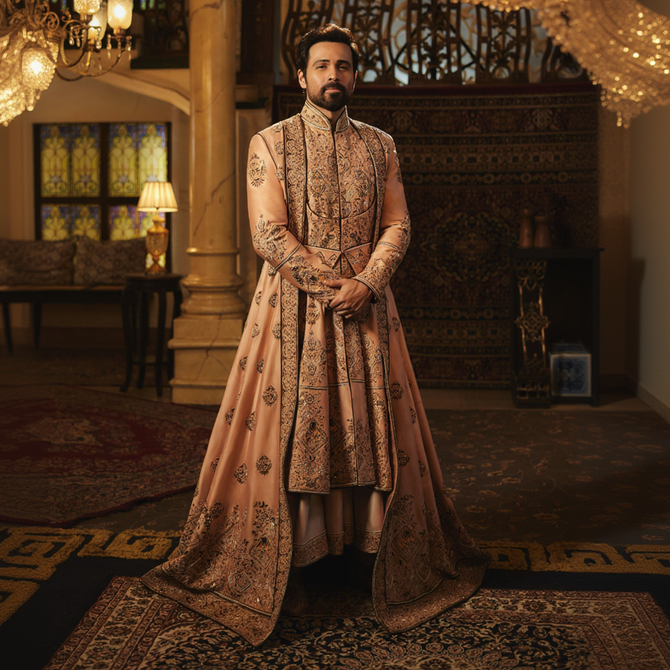


Choosing a wedding sherwani is not about finding the most embroidered design or following whatever is trending this season. It is about selecting an outfit that feels right for the wedding, reflects personal style, and holds up in photographs and memory long after the celebrations are over.
That is also where most grooms get stuck. Traditional or Indo-Western silhouette? Which colours actually work? Does a custom sherwani make sense? How do you style the final look without overdoing it?
This guide answers those questions in the order they naturally arise, so each decision leads to the next with greater confidence and less second-guessing.

Before You Choose a Sherwani, Start with Your Wedding
Most grooms start by browsing sherwanis. A more useful starting point is the wedding itself.
Think about the setting before the outfit. A palace wedding, a beach ceremony, and an intimate indoor celebration each create a completely different backdrop. The season, the time of day, and the overall wedding style all shape what will feel appropriate and comfortable on the day.
Once those things are clear, choosing a sherwani for a groom becomes far less overwhelming. Instead of working through hundreds of designs, the focus shifts to the ones that genuinely suit the occasion.
Traditional vs Indo-Western Sherwani
The first real decision is not colour or embroidery. It is the silhouette.
A traditional sherwani follows classic Indian tailoring and suits heritage-inspired celebrations naturally. An Indo-Western sherwani keeps those roots but brings in a more contemporary silhouette for grooms who prefer a modern aesthetic. Neither is the better option in isolation. The right choice depends on the kind of wedding being planned and how the groom wants to present himself on the day.
A good starting point:
Choose a traditional sherwani if you:
- prefer a timeless wedding style
- are planning a classic or cultural ceremony
- want a look rooted in Indian tradition
Choose an Indo-Western sherwani if:
- contemporary styling feels more natural
- cleaner silhouettes appeal to you
- you want a modern interpretation of ethnic menswear.
Choosing between the two styles becomes even easier once you understand where each one naturally fits. Our comparison guide of traditional vs Indo-Western sherwani explains the similar idea so you can be confident with your choice rather than simply wearing it.

Best Sherwani Colours for Grooms in 2026
Colour is usually the first thing people notice, but it works best when it comes after the silhouette decision has been made.
Rather than asking which colour is trending, the more useful question is which direction suits the wedding. The right colour should complement the venue, the lighting, and the mood of the celebration. Trends can point in a direction, but they should inform the decision rather than make it.
A good starting point:
Lighter colour families tend to work well for:
- daytime weddings
- outdoor ceremonies
- celebrations built around softer and more elegant décor.
Richer colour families suit:
- evening weddings
- grand venues
- more formal atmospheres (where deeper tones photograph well).
Lighter and richer colours are just the beginning. The final choice should come after considering your skin tone, wedding style, and current colour trends, all of which are covered under our sherwani colours guide for grooms.

A Groom's Guide to Fit, Fabric and Style
A designer sherwani for men might catch attention through its colour or embroidery, but fit and fabric are what determine how it actually feels across hours of celebration. A well-fitted sherwani looks sharper and allows easier movement through ceremonies, rituals, and receptions without the outfit becoming a distraction.
Fabric should match both the season and the setting. Lighter options suit warmer weather and daytime functions. Richer, heavier fabrics create a more regal result for evening and winter weddings. The silhouette then brings everything together by balancing comfort with proportion.
A few essentials worth keeping in mind:
- fit matters more than heavy embellishment
- fabric should be chosen for the season rather than appearance alone,
- the silhouette should suit the body type rather than simply follow a trend
- comfort across the full day of celebrations matters as much as how the outfit looks in the ceremony itself.
However, fit is only one part of the story. Fabric and style play an equally important role in the final look and our groom’s guide to fit, fabric and style talks about the same in detail.

Custom-Fit Sherwanis For Indian Weddings
The choice between ready-to-wear and custom tailoring usually comes down to what the groom expects from the outfit rather than budget alone.
Ready-to-wear suits are for grooms whose:
- wedding is approaching soon
- have standard measurements
- have already found a designer sherwani online that feels right.
Made-to-measure works better for grooms who:
- want a cleaner fit with minor adjustments
- where comfort is a priority
- there is enough time before the wedding
Bespoke is the right direction when:
- every detail needs to be personalised
- when the wedding is far enough to allow for the tailoring
- when creating something genuinely unique matters more than convenience
This helps you identify the right option for your needs. Understanding how each one works is the next step, and our custom-fit sherwani guide explains it in detail, so you don't have to second-guess yourself.
Guide to Style a Sherwani with Stole, Safa and Mojaris
The sherwani is the centrepiece, but the accessories determine whether the overall look feels balanced or overdone. The goal is not to wear more. It is to wear the right combination.
If the sherwani already features:
- detailed embroidery
- statement jewellery is being worn
- the celebration has a refined dress code
Keeping the styling understated tends to produce a stronger result.
If the sherwani has:
- minimal detailing
- you want regal appearance
- The event demands grander aesthetic
An accessory combination can add the visual weight the occasion calls for.
The question isn't whether you should wear these accessories. It’s how to choose and pair them without making the outfit feel overdone, something we explored in our guide to style a sherwani with accessories.
Common Mistakes That Can Affect Your Wedding Look
A memorable wedding look is rarely the result of spending more. More often, it comes from avoiding a handful of decisions that quietly undermine an otherwise strong outfit.
- Choosing trends before considering the wedding setting.
- Prioritising heavy embroidery over comfort.
- Leaving alterations until too close to the date.
- Over-accessorising a sherwani that already carries enough detail.
- Picking colours that do not work with the venue or the lighting.
The strongest wedding outfits succeed because every decision works together rather than any single element carrying the look on its own.
A Quick Sherwani Checklist Before You Buy
Before committing to a final choice, run through these:
- Does the style suit the wedding?
- Is the colour right for the venue and time of day?
- Will the fabric be comfortable throughout the full day of celebrations?
- Does the fit feel natural and unrestricted?
- Do the accessories complement rather than overpower the sherwani?
A ‘yes’ across all five means the decision is already thoughtful.
Final Thoughts
The right designer sherwani for men's wedding dressing rarely comes from following trends or picking the most elaborate option on the page. It comes from decisions made around the specific wedding, the specific groom, and what the occasion actually calls for.
Some grooms are looking for a timeless groom sherwani for a wedding rooted in tradition. Others want a designer sherwani for the groom that sits closer to contemporary styling. Some are investing in a designer wedding sherwani for the groom, built entirely around their measurements. The route is different for each, but the approach is the same. One decision at a time, starting with the wedding rather than the outfit.
Bharat Reshma's sherwani collections cover both ends of what this guide has walked through. Traditional craft for grooms who want heritage dressing done properly, and contemporary refinement for those who want something more current. Either way, the starting point is the same: a sherwani built around the groom rather than the other way around.